The maker’s notebook
A practical guide to buying craft supplies that hold up
Every maker eventually learns the same lesson the hard way: the difference between a project you finish and a project that sits in a basket for two years is rarely skill. It is usually the materials. A yarn that splits, a fabric that shrinks two inches in the wash, a bead whose coating wears off on the first wear — small failures that quietly drain the fun out of making. This guide walks through what we look for when we order stock for the shop, so you can judge supplies on your own terms, whether you buy from us or anywhere else.
Start with fiber, not color
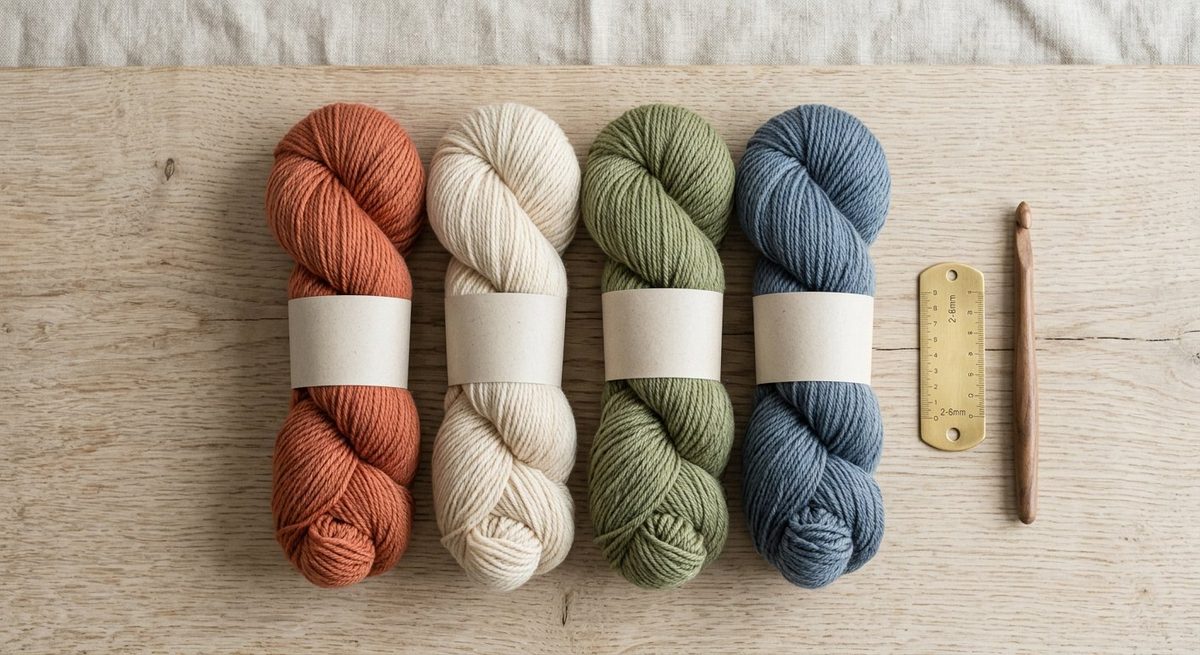
Color is what pulls most of us toward a yarn, but fiber content decides how a finished piece behaves. Wool holds its shape and resists wrinkles; cotton is cool and machine washable; alpaca and mohair are warm and halo-soft but stretch under their own weight; acrylic is inexpensive and easy-care but pills with friction. Blends exist to solve exactly these trade-offs, and a 75% wool / 25% nylon sock yarn is a good example: the wool breathes, the nylon takes the wear at heel and toe.
Then look at weight. A yarn labeled DK should knit at roughly 5.5 stitches per inch on a 4 mm needle; worsted sits closer to 4.5 stitches on 5 mm. If the label gives gauge, trust it over the name, because one shop’s sport can be another shop’s light DK. For any garment, buy all the yardage you need in a single order and check the dye lot printed on the band. Two skeins of the same color name can differ visibly when they were dyed weeks apart.
A quick check before you commit
- Match fiber to the care you are willing to give the finished object.
- Confirm yardage per skein, not just skein count, against the pattern requirement.
- Buy one extra skein for swatching and for blending across dye lots.
Read the bolt end before you cut
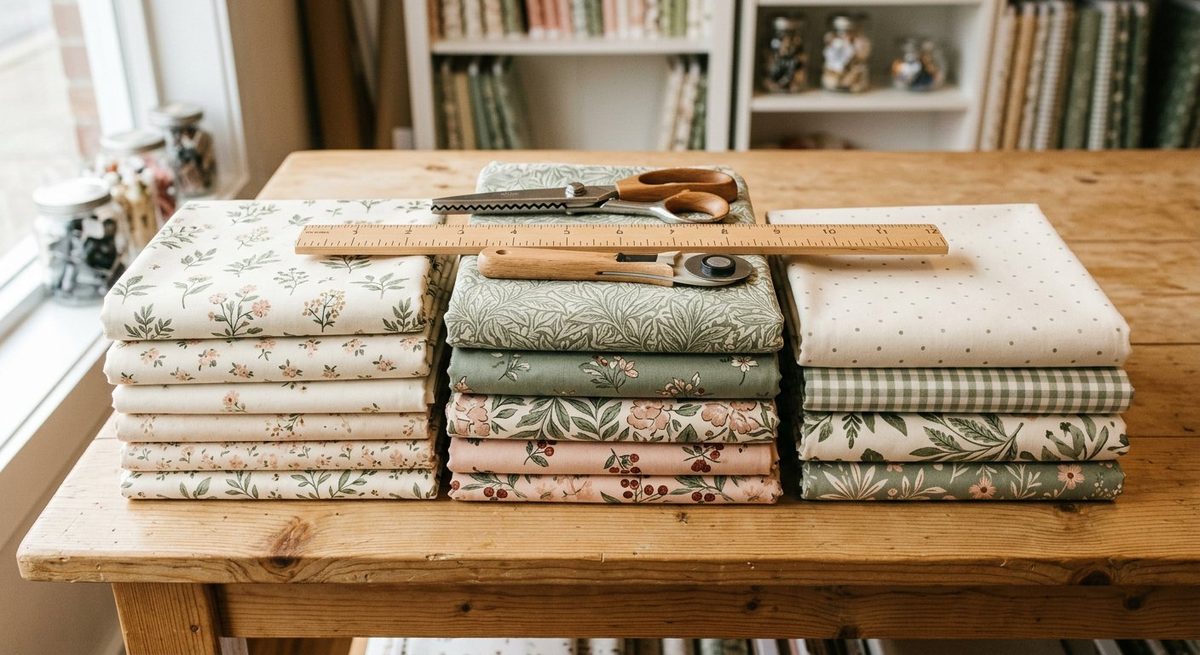
Fabric is where beginners lose the most money, usually by pre-washing the wrong thing or skipping it entirely. Cotton shrinks, sometimes 3–5%, and linen can move more. If a finished quilt or garment needs to stay true to size, wash and dry the yardage the way you plan to launder the finished piece before you cut into it. For quilting cotton intended as wall art or a bag lining, many makers skip pre-washing to keep the crisp hand and the factory finish that makes rotary cutting easier.
Weight matters as much as fiber. Quilting cotton at 4.5 oz per square yard is stable and forgiving. Apparel cotton in voile or lawn is lighter and drapes beautifully but shifts under the machine, so it rewards a new needle and a walking foot. Home-decor weight at 8 oz or more can dull a rotary blade quickly — cut it in fewer layers and change the blade when it starts skipping threads rather than tearing them.
Check the bolt end for width and fiber content, then look at the weave against a window. Uneven light through the cloth means a loose sett that will fray. Pull a thread from the crosswise edge: if it snaps easily, the fabric is likely dry-finished and will need a gentler wash. A quick squeeze tells you about body — stiff fabric softens with washing, but limp fabric rarely gains structure.
Beads and findings: consistency beats variety
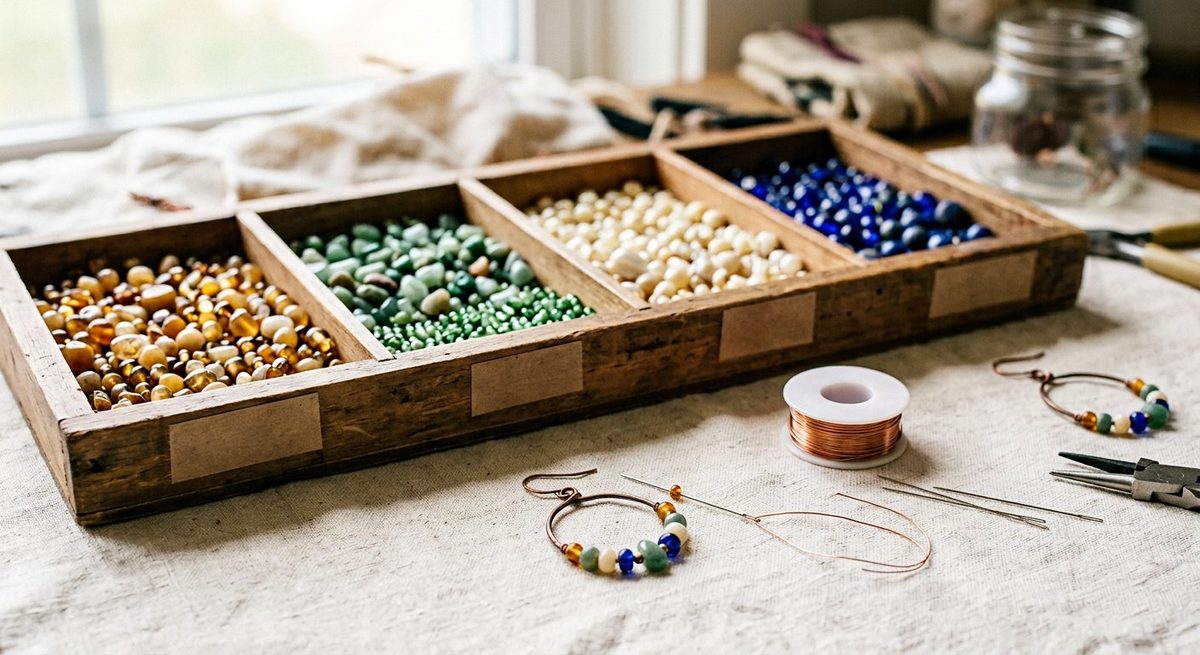
When you buy beads by the scoop, size and color vary more than the photo suggests. If you are making a matched pair — earrings, cufflinks, a set of stitch markers — buy a single strand and work from it. Glass and stone behave differently on the needle too: glass is uniform and takes a sharp edge at the hole, while natural stone chips and its holes can be slightly irregular, which matters when you thread fine wire.
Findings deserve the same scrutiny. Sterling silver and gold-filled components cost more than plated base metal, but gold-filled wire carries a bonded layer of gold that survives daily wear far longer than electroplating. For anything that touches skin frequently, look for nickel-free descriptions and ask what the base metal is. That single question prevents most returns in a jewelry supply shop.
Tools: buy the ones you touch every day
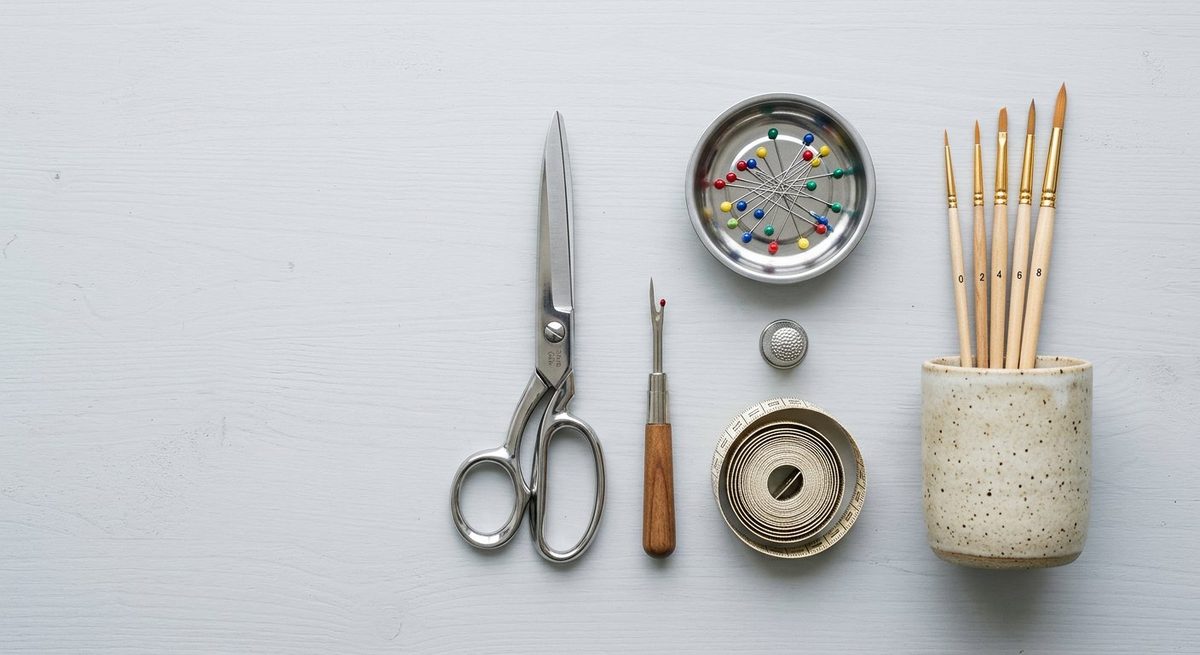
It is tempting to buy a hundred-piece kit and discover that ninety pieces are duplicates. A better approach is to spend on the three or four tools your hands meet in every session. Fabric shears that cut cleanly to the tip, a seam ripper with a fine point, glass-head pins that will not melt under an iron, and a tape measure with metal ends that will not fray are worth more than any gadget. Add a rotary cutter and a self-healing mat if you quilt, and a set of interchangeable circular needles if you knit in the round.
Maintenance is part of the purchase. Wipe blades after cutting anything with sizing or glue, store pins in a magnetic dish rather than the fabric, and keep needles in their package so you can tell a 70/10 from an 80/12 under good light. A dull blade is the most common cause of skipped stitches that people blame on the machine.
Paper and stationery: check the grain
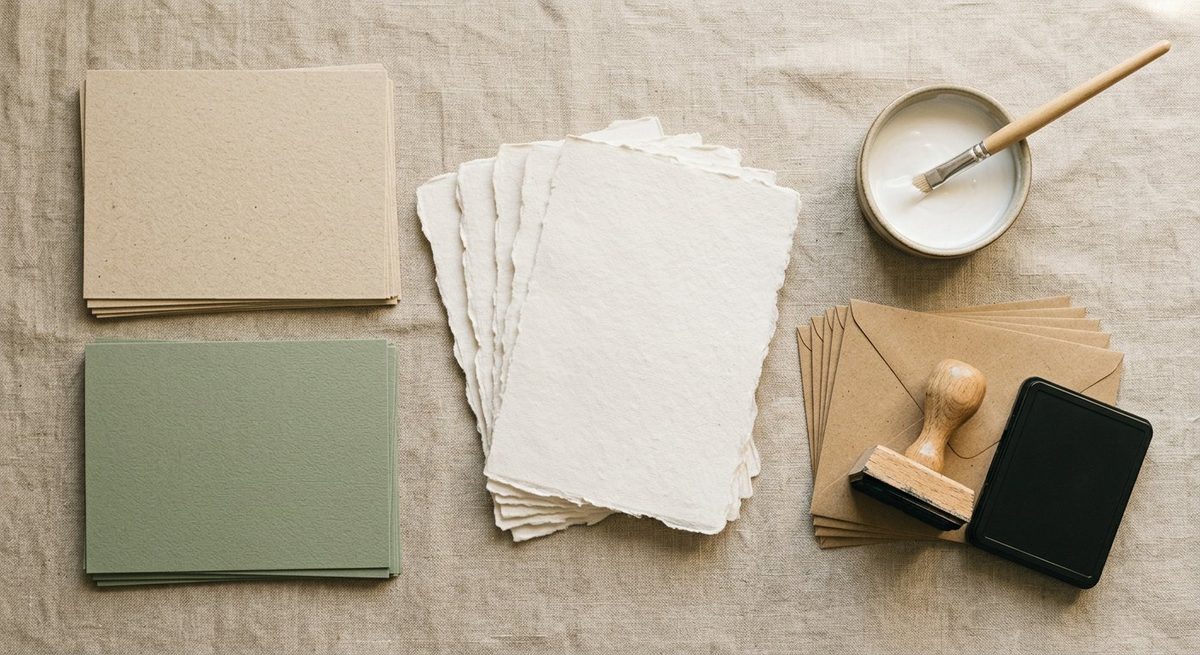
Paper has a grain, and folding across it produces a clean crease while folding with it cracks the surface. To find the grain, flex the sheet gently in both directions; the direction that resists less is the grain direction, and folds should run parallel to it. Cardstock at 80 lb cover weight (about 216 gsm) is a dependable middle ground for folded cards, while 110 lb takes ink and embossing without warping.
If you stamp or letterpress, paper finish matters more than weight. Smooth, coated stock gives crisp impressions; cold-press textured stock swallows fine detail. Handmade cotton paper is beautiful for bookbinding and box linings but tends to feather with water-based ink, so test on an offcut before committing a whole run.
Build a starter kit without overspending
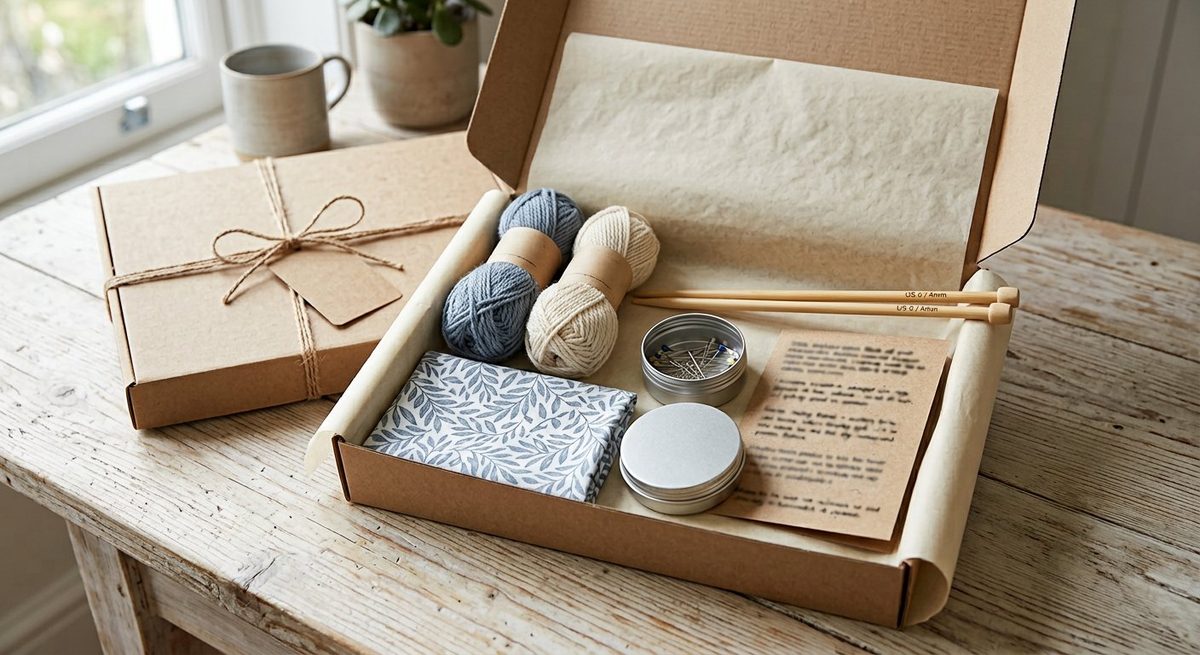
A first kit should cover exactly one project. That constraint keeps costs down and keeps the learning curve gentle. Here is the rough shape of what we put into a beginner bundle, and what comparable supplies typically cost in a small shop.
| Item | What to look for | Typical range |
|---|---|---|
| Wool or cotton yarn | 2–3 skeins, same dye lot, listed yardage | $12–$32 |
| Knitting needles or hook | Matched to the yarn’s gauge, metal or wood | $8–$18 |
| Quilting cotton | Fat quarters or half yards, 100% cotton, 44” wide | $3–$5 each |
| Beading needle and thread | Size 10–12 needle, conditioned beading thread | $6–$14 |
| Basic tool trio | Snips, seam ripper, glass-head pins | $18–$34 |
A sensible budget for a first project usually lands between $35 and $70. Spending more does not guarantee a better first attempt; spending in the right places does. Put money into the material you will handle the most and into the tool that has to be precise, and save on the extras you can borrow or substitute for a single project.
Store supplies so they survive the season
Wool should breathe. Seal it in a plastic bin and you invite moisture and moths; store it instead in a cotton bag or a lidded basket with a cedar block, away from direct sun that fades dye. Fabric on a shelf should be folded loosely rather than creased hard along the same line for months, because permanent creases weaken fibers exactly where you plan to cut. Beads keep best in shallow trays sorted by size, and metal findings stay bright in a closed box with a silica packet.
Paper is the exception that does want enclosure — flat, dry and out of light. Keep it in a shallow drawer or portfolio rather than standing on edge, where the bottom corners curl under their own weight.
What to expect when you buy from a small shop
Small shops cannot always match the price of a warehouse, but they can tell you the dye lot on the shelf, cut a half yard without a minimum, and answer an email within a day. At Thistle & Loom, orders are packed by hand Monday through Friday, dispatch takes one to two business days, and shipping is calculated at checkout before you confirm anything. If something arrives damaged or is not what the listing described, contact us within 30 days of delivery and we will arrange a return or a replacement.
One last piece of advice from years of packing boxes: order a little more than the pattern calls for. Running out of a dye lot mid-project is the most common reason a beautiful project stalls, and the fix costs far more than the extra skein would have.